 Buyer's guide
9 min read
The best knowledge base software for agencies, judged at the fifteenth client
September 15, 2026
Documentation does not rot all at once. It rots one copy at a time, and by the time anyone notices, nobody can say which copy is right.
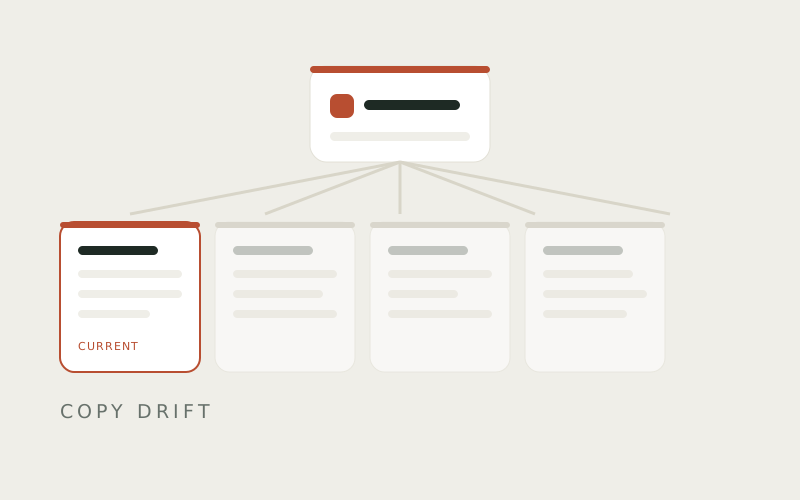
You write a good guide. Eleven clients need it, so eleven clients get it. That might be eleven Notion pages, or eleven PDFs in eleven shared drives, or eleven copies inside one tool that calls them workspaces. The mechanism does not matter. What matters is that there are now eleven of something that used to be one thing.
On day one they are identical and everything is fine.
The process changes. Not dramatically: a button moved, a form got a new field, the step that used to be third is now second.
You update the guide. Specifically, you update a guide, for the client who noticed. The other ten still describe the old process, and nothing anywhere records that they are now wrong.
Someone asks a question, you send them the guide, and they come back confused because the screen does not match what they are reading. Now you are not fixing documentation. You are auditing eleven copies to work out which were ever corrected, in what order, and by whom.
This is where people stop maintaining documentation. Not because they stopped caring, but because the job quietly changed from updating a guide into managing a fleet.
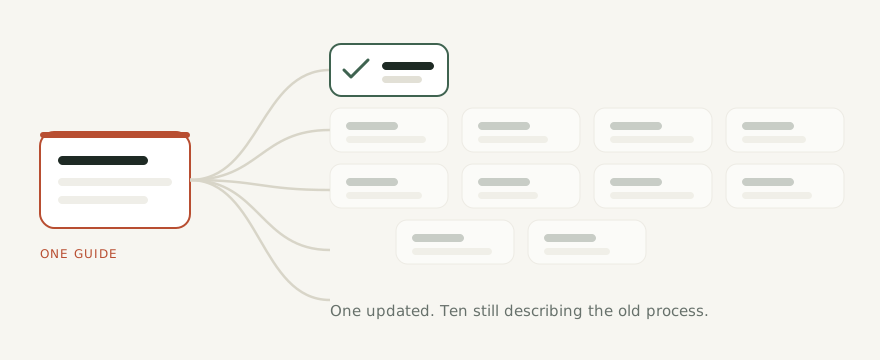
Every fix for this that depends on remembering is a fix that fails. Change logs, naming conventions, a spreadsheet tracking which client holds which version. All of them work while someone is watching, and all of them stop working the first genuinely busy week.
The reason is structural rather than personal. If a guide can exist in eleven places, it will eventually exist in eleven versions, because the only thing holding them identical is human attention, and human attention is exactly the resource you were trying to conserve.
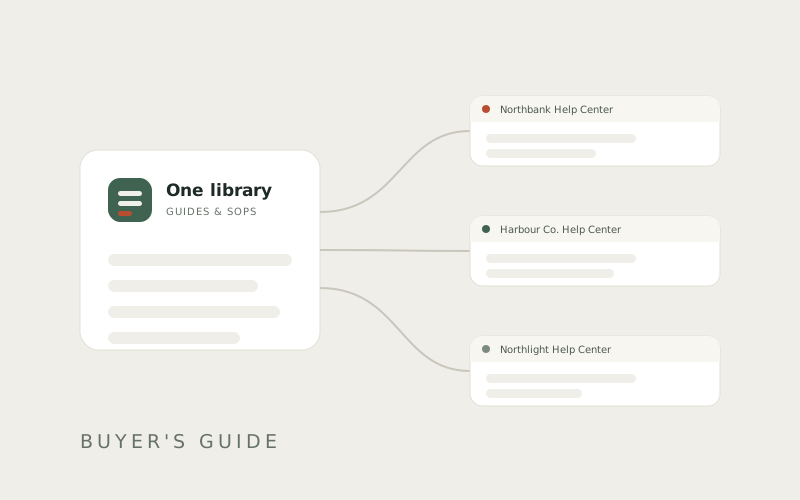
Docssier does not copy a guide into a help center. It publishes the guide there.
That distinction sounds small and is the entire product. A guide lives once in your library. Publishing it to a hub places it on that hub. Publish the same guide to a second hub and there are still not two guides. There is one guide, appearing in two places.
So when the process changes, you correct the guide. Every hub carrying it is current from that moment, with nothing to export, nothing to reconcile, and no older version sitting on a client's help center quietly contradicting the rest.
At one client this is not a problem worth solving. One guide, one place, edit it when it changes. Notion is fine. Google Docs is fine. Anyone telling you otherwise is selling something.
The trouble starts where the number of places exceeds the number of things a person can hold in their head, which is somewhere around four, and gets worse from there.
If you have eleven, you already knew that before you read this.
Capture a process, publish it as a help center under your own name or a client's, and answer the repeat questions from what you published.